Winter
Ice Dams in South Dakota: Why Your Ceiling Stains in February
A brown ring on the ceiling often appears days after the ice dam formed — and rarely where you expect. Here is how meltwater travels, what to do safely and how to stop the next one.
- In-depth guide
- Updated November 24, 2026
- South Dakota specific
- Free to read
- 24/7 Live Answer
- Same-Day Response
- Insurance Documentation Help
- Local South Dakota Crews
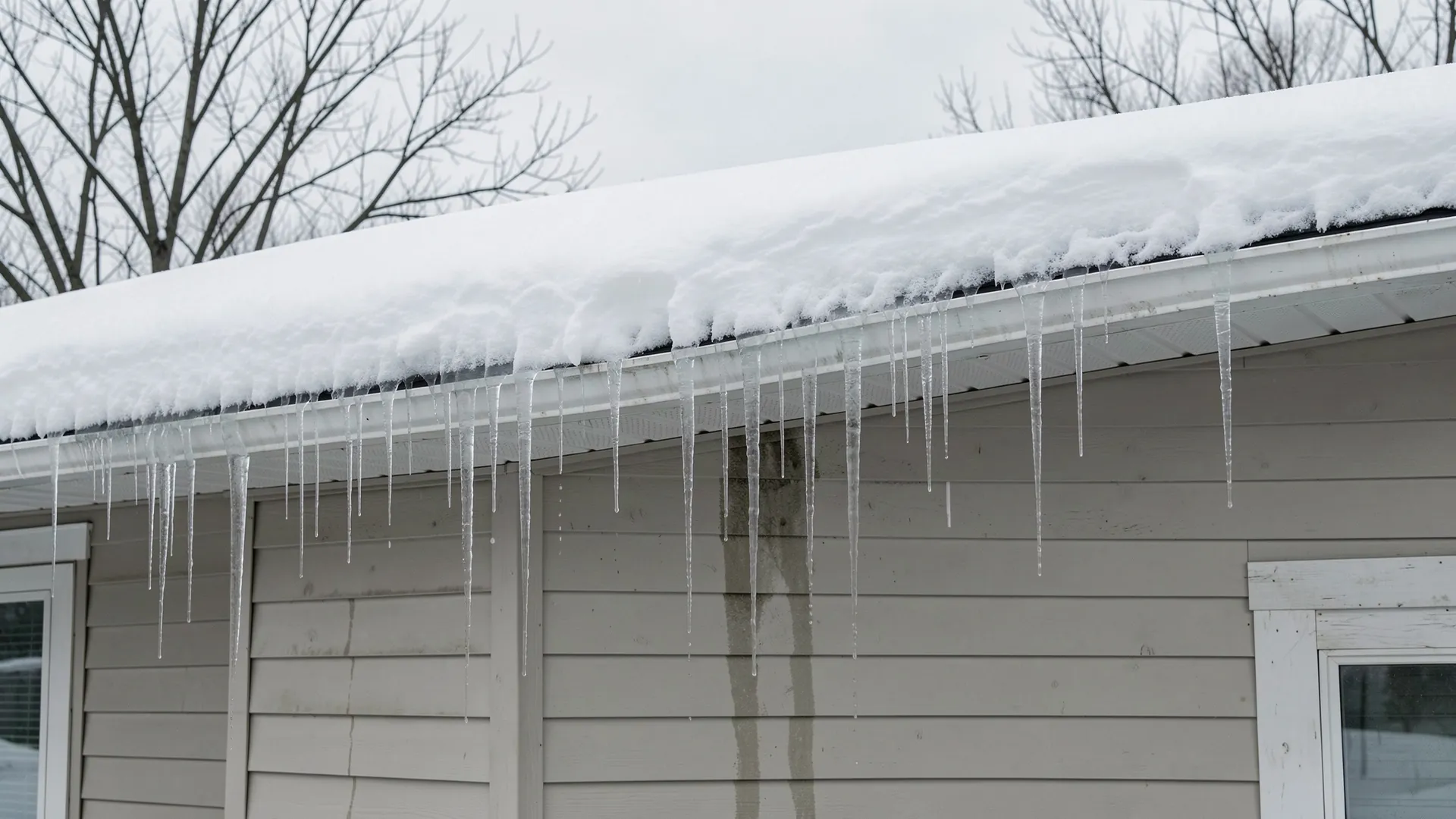
- Ice dams form when attic heat melts snow that refreezes at the cold roof edge. The water backs under shingles and travels.
- A ceiling stain often appears far from the exterior wall, days or weeks after the dam formed.
- Do not climb the roof or chip ice with an axe. Catch the water, document the damage and call for help.
- Long-term fixes are air sealing, insulation and ventilation — not just a roof rake.
February in South Dakota can deliver a stretch of single-digit nights followed by a sunny afternoon in the thirties. That freeze-thaw pattern is exactly what builds ice dams. Snow sits on the roof, the attic warms the underside of the deck, meltwater runs down to the cold eaves and refreezes. Repeat that cycle for a week and a ridge of ice forms at the roof edge.
Most homeowners do not notice the dam itself. They notice a brown ring spreading across a bedroom ceiling, a paint bubble near a closet, or a drip that starts at dinner time and stops by morning. By then, water has often been traveling inside the roof assembly for days. Here is how to tell what is happening, what to do safely, and what actually prevents the next one.
How an ice dam forms
Three conditions have to line up: snow on the roof, a warm attic, and subfreezing air at the roof edge. Heat escapes from the living space into the attic, warms the roof deck, and melts the bottom layer of snow. The meltwater slides down the roof under the snow cover until it reaches the overhang, which stays cold because it sits above the unheated soffit. There it refreezes.
As the ice ridge grows, it creates a dam. More meltwater pools behind it and wicks upward under shingles and felt. Once water gets past the roof covering, it can travel along the sheathing, drip onto insulation, run down rafters, or follow a top plate into a wall cavity. The visible ceiling stain is usually just the place where the water finally found a path through the drywall.
Why some roofs are worse than others
- Air leaks into the attic. Recessed lights, hatch covers, bathroom fans and wiring penetrations let warm indoor air rise.
- Thin or uneven insulation. Bare spots and compressed batts create warm channels.
- Poor ventilation. Soffit and ridge vents that are blocked by insulation or snow cannot flush warm air.
- Complex roof shapes. Valleys, dormers and low-slope sections collect snow and slow drainage.
- Dark shingles and sun exposure. Even a cold roof can shed meltwater on a sunny afternoon.
Why the stain appears away from the roof edge
Water does not fall straight down through a roof. It follows the path of least resistance: along the underside of sheathing, down a rafter, across a top plate, or through a gap in the insulation. A dam at the front eave can show up as a stain in a back bedroom if the framing slopes that way.
That is why “the stain is not near the ice” does not rule out an ice dam. It also explains why the leak can stop and start. When the roof refreezes, the flow pauses. When the afternoon sun returns, it starts again. A stain that grows only on sunny days is a strong clue.
Ice dam, roof leak or condensation?
| Clue | Ice dam | Roof leak | Condensation |
|---|---|---|---|
| Timing | After snow, freeze-thaw | During rain or wind | Cold weather, daily |
| Location | Often near exterior wall or ceiling edge, but can travel | Near a penetration, valley or damaged shingle | Windows, cold walls, attic underside |
| Pattern | Starts small, grows on sunny days | Wet after storms, may be widespread | Frost, droplets, damp sheathing |
| Roof condition | Ice ridge at eave, icicles | Missing shingles, flashing damage | No roof defect required |
If you are unsure, do not guess from the ground. A moisture check in the attic can separate a roof-path leak from condensation. The fix is different for each.
Water coming through the ceiling?
Catch what you can, move valuables, and call for local drying before the ceiling or insulation saturates further.
Call (888) 217-0216What to do right now
- Protect the room below. Put a bucket under the drip, move electronics and furniture, and lay towels or a tarp. If the ceiling is bulging or sagging, keep people out of the room — a ceiling can collapse under trapped water.
- Do not climb onto a snow-covered roof. Ice dams form at the edge, which is exactly where a ladder is least stable. Falls are the most serious risk in this situation.
- Document the damage. Photograph the ceiling stain, the ice at the eave, any bubbling paint and the contents that were affected. Note the date and time the leak started.
- Reduce the water pressure behind the dam safely, if you can. A roof rake used from the ground can remove snow from the lower roof. Do not pull snow toward you while standing under it, and do not use a rake near power lines.
- Call for help. A restoration crew can extract water, set drying equipment and check insulation and framing. A roofing professional can address the underlying roof and attic defects. Call (888) 217-0216 for local dispatch.
What not to do
- Do not chip ice with an axe, hammer or chisel. You can cut shingles, puncture flashing or damage the roof deck.
- Do not pour salt on the roof. Salt and ice-melt chemicals can corrode metal, stain siding and kill landscaping below. Some products also damage shingles.
- Do not use a heat gun or open flame. Combustible roof materials and insulation are nearby.
- Do not ignore a small stain. The visible ring is often smaller than the wet area behind it.
- Do not run a bathroom or kitchen fan into the attic. That adds warm, moist air to the exact space you are trying to keep cold and dry.
Short-term relief and long-term fixes
Short-term relief
Removing snow from the lower roof with a roof rake opens a channel for meltwater and reduces the dam. A dehumidifier in the affected room can help manage indoor humidity while you wait for a crew. Box fans aimed at a wet ceiling do not fix the roof path, but they can help dry the room after the leak is controlled. Never use a space heater near wet insulation or concealed framing without professional guidance.
Long-term prevention
- Air-seal the attic floor. Seal recessed lights, hatch covers, top plates, wiring holes and fan ducts. This is the highest-value fix.
- Insulate evenly. Keep insulation over the exterior wall plate and avoid compressed or missing sections.
- Ventilate correctly. Keep soffit vents clear and confirm ridge or gable ventilation is working. Bathroom and kitchen fans should exhaust outdoors, not into the attic.
- Consider an ice-and-water shield. A membrane under the shingles at the eaves provides a second barrier during the next big winter.
- Keep gutters and downspouts clear. Ice can build in a gutter that is already full of debris. See our gutter guide.
A roof rake is a temporary tool, not a prevention strategy. If you have had an ice dam two winters in a row, the attic is telling you something.

Insurance and documentation
Ice-dam claims are often reviewed closely because insurers distinguish between a sudden interior loss and deferred roof maintenance. Interior water damage from an ice dam may be covered under some policies, while the cost of ice removal or roof repair may be treated differently. Read your policy or ask your agent before assuming.
Photograph the ice ridge, the ceiling stain and any damaged contents. Keep receipts for emergency tarps or temporary repairs. Do not replace the ceiling before the adjuster has seen it unless the damage is unsafe. For more on how cause and timing affect a claim, read does homeowners insurance cover water damage.
When to call a crew
Call if water is actively dripping, if the ceiling is sagging, if insulation or framing is wet, or if the stain has returned after a previous repair. A local crew can extract water, dry the structure and document the loss. If the roof itself is damaged, the crew can coordinate with a roofing professional rather than guessing at the source.
For the service side, see storm and wind-driven rain damage, frozen and burst pipes and water damage restoration. If the wet area has been damp for days, also read how fast mold grows after water damage.
Quick questions
Can I just wait for the ice to melt?
Sometimes the leak stops as temperatures rise, but the water already inside does not disappear. Insulation, drywall and framing can stay damp and grow mold. If the ceiling is wet, dry it now rather than waiting for spring.
Does a roof rake prevent ice dams?
It reduces the snow load and can limit the dam, but it does not fix the attic heat that causes the problem. Air sealing and insulation are the real fixes.
Why does the leak only happen on sunny days?
Sun and warm afternoons melt snow and create flow. Cold nights refreeze it. A leak that appears only in the afternoon is a classic ice-dam pattern.
Ice dam leaking into the house?
Get water out of the ceiling and insulation before the damage spreads. Local dispatch is open 24/7.
Call (888) 217-0216Written by the South Dakota Water Damage Pros editorial team using local restoration and insurance-claim experience. This is general information, not legal, engineering or insurance advice. Confirm coverage and code requirements with your own professionals.
Keep reading
Related guides
Preventing Winter Water Damage
A cold-climate checklist for pipes, ice dams, snowmelt and sump readiness.
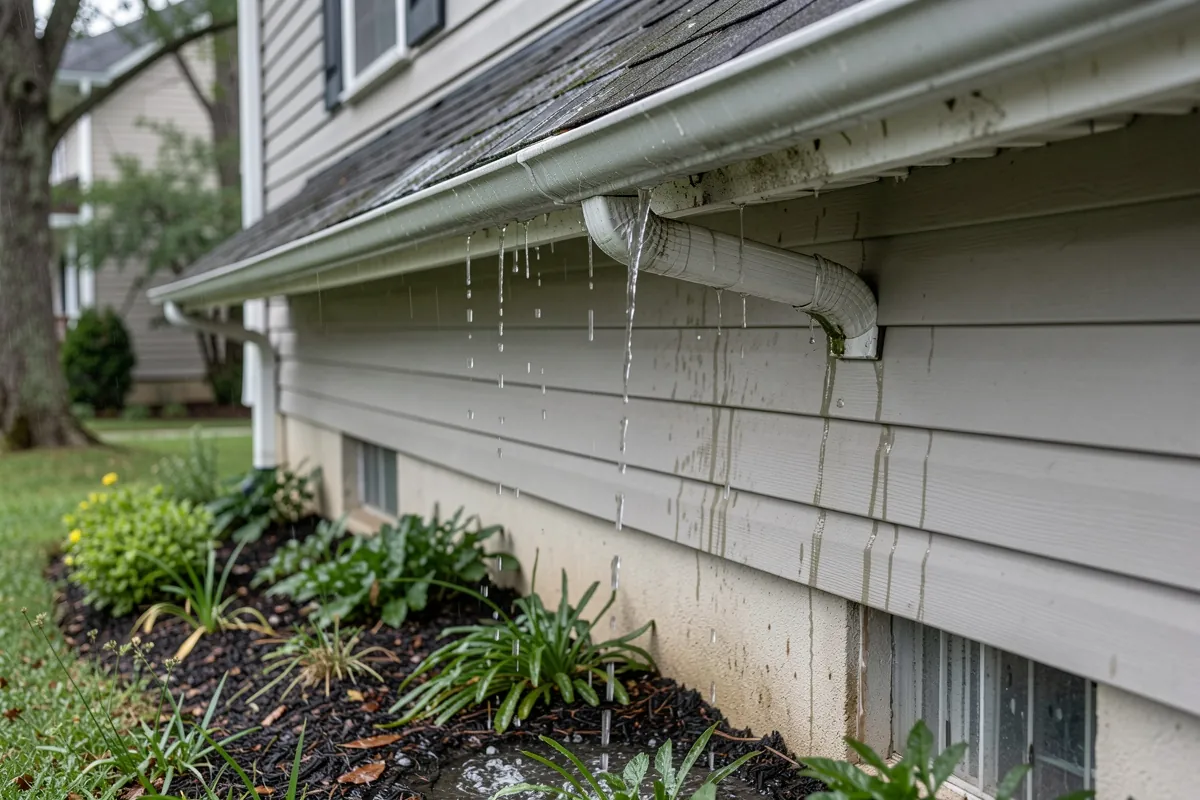
Clogged Gutters and Foundation Water
How overflow at the roof edge ends up soaking a foundation.
Hidden Water Damage Warning Signs
Odors, stains and buckling that point to concealed moisture.

Water damage right now?
One call connects you with an available local South Dakota crew.