Fall maintenance
Clogged Gutters and Foundation Water: What Overflow Does
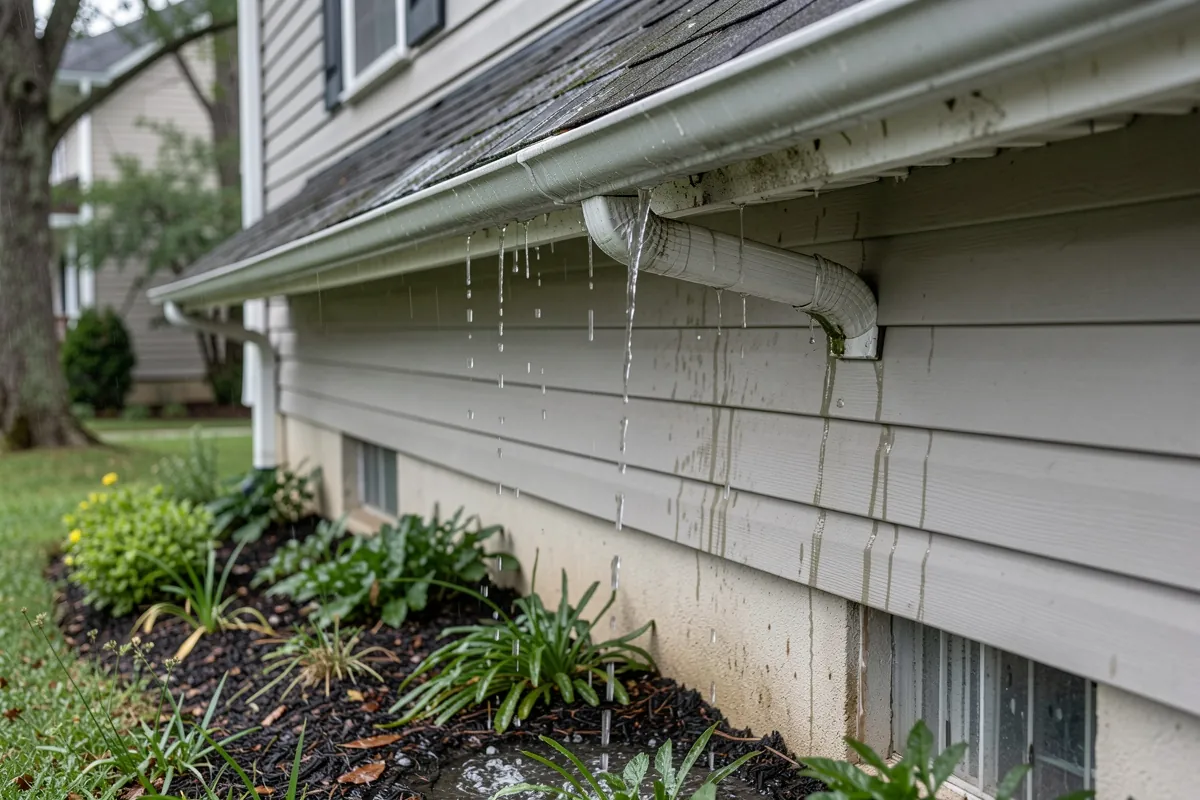
A gutter full of leaves does not just drip off the roof. It dumps hundreds of gallons beside the foundation, where water can seep into a basement all winter.
- In-depth guide
- Updated November 24, 2026
- South Dakota specific
- Free to read
- 24/7 Live Answer
- Same-Day Response
- Insurance Documentation Help
- Local South Dakota Crews
- A clogged gutter does not just drip off the roof. It dumps roof runoff beside the foundation, where it can seep into a basement for months.
- Most gutter problems show up first as fascia stains, peeling paint, eroded soil or a damp basement corner.
- Downspouts should discharge 4 to 6 feet from the foundation, and the soil should slope away from the wall.
- If water is already inside, dry the structure and fix the drainage — not just the visible stain.
Gutters are easy to ignore because they fail quietly. A gutter full of leaves does not announce itself. It overflows during the next rain, sends a sheet of water down the siding, and saturates the soil against the foundation. Weeks later, a basement corner smells musty or a paint bubble appears above the baseboard. By then, the roof runoff has been soaking the same wall for a long time.
In South Dakota, the stakes are higher because the ground freezes. Water that collects beside a foundation in late fall can freeze, expand and open cracks. Spring melt then follows the same path. Cleaning gutters is not cosmetic maintenance; it is foundation protection. This guide covers what overflow does, how to spot it, how to clean safely and what to fix so the next storm drains away from the house.
What gutter overflow does to a home
It saturates the foundation
A roof can shed hundreds of gallons from a single storm. A working gutter collects that water and carries it to a downspout. An overflowing gutter dumps it in a narrow band along the wall. The soil becomes saturated, hydrostatic pressure builds against the foundation, and water finds cracks, the floor-wall joint, window wells or porous block.
It damages fascia and siding
Water spilling over the gutter runs behind the fascia board and down the siding. Paint peels, wood softens and joints open. In winter, that trapped water freezes and pries materials apart. A gutter that pulls away from the fascia is often a sign that it has been carrying too much weight or holding water for years.
It makes ice dams worse
A gutter full of debris holds water and snow. That slush refreezes at the roof edge and creates a dam. Keeping gutters clear does not fix attic heat, but it removes one contributor to winter ice buildup.
It erodes the landscape and can reach a window well
Overflow carves channels through mulch, washes out plantings and can fill a window well. A window well that fills with water is a direct path into a basement. If you have a window well, check it during every heavy rain.
Warning signs
- Stains on the fascia or soffit. Look for dark streaks, peeling paint or soft wood under the gutter line.
- Water at the foundation after rain. A wet band, puddle or eroded trench along the wall points to a discharge problem.
- Damp basement corners or a musty smell. The leak may be groundwater, but roof runoff is a common contributor.
- Gutters sagging or pulling away. This can mean loose hangers, rusted spikes or the weight of standing water.
- Plants growing in the gutter. If you can see greenery from the ground, the gutter is already a planter.
- Water pouring over the front edge during rain. This is the clearest sign of a blockage or an undersized gutter.
- Mosquitoes or standing water. A gutter that never drains is a breeding site.
Basement damp after every rain?
Roof runoff, grading and foundation seepage often work together. A moisture assessment can separate the causes.
Call (888) 217-0216Why South Dakota gutters clog
Fall is the obvious season, but gutters collect debris year-round. Cottonwood fluff, maple seeds, ash keys, shingle grit, bird nests and wind-blown prairie dust all build up. A gutter that looks clear from the ground can have a several-inch layer of sludge at the bottom that slows flow and holds moisture. In winter, that sludge freezes into a solid block.
Homes surrounded by mature trees need at least two cleanings a year, sometimes three. Homes with gutter guards still need occasional inspection — guards reduce leaves but do not stop grit, seeds or small debris from accumulating.
How to clean safely
Ladder falls are the main risk, not the gutter itself. If you are not comfortable on a ladder, hire the work. If you do clean them yourself:
- Work from stable ground. Use a ladder rated for your weight, set it on firm level ground, and keep three points of contact. Do not overreach; move the ladder instead.
- Wear gloves and eye protection. Gutters contain sharp metal edges, screws, dirty water and sometimes wasp nests.
- Remove debris by hand or with a scoop. Put it in a bucket, not on the roof or in the downspout.
- Flush the gutter and test the downspout. A garden hose running at low pressure shows whether water actually reaches the ground. If the downspout is blocked, use a plumber's snake or a hose from the bottom, not high pressure from the top.
- Check the slope. Water should flow toward the downspout, not sit in the middle. Standing water means a sagging hanger or a slope problem.
- Look for damage. Cracked sections, loose hangers, rust-through and separated joints are easier to fix before they fail completely.
Do not walk on a wet or frosty roof. Do not use a pressure washer from a ladder. And do not clean gutters during a storm or when ice is present.
Downspouts and grading
Clean gutters only move the problem if the downspout ends at the foundation. The goal is to get roof water at least 4 to 6 feet away from the wall and onto ground that slopes away from the house.
- Add extensions. A flexible or rigid downspout extension is inexpensive and effective. Direct it onto a splash block or a gravel bed, not onto a neighbor's property.
- Check the slope. Soil should slope away from the foundation, roughly six inches over the first ten feet. Settled soil, mulch beds and new landscaping often reverse that slope.
- Keep discharge away from window wells. A downspout that empties into a window well is feeding the basement.
- Consider a rain barrel or dry well. These can reduce volume, but they need an overflow path that still carries water away from the foundation.
- Do not bury a downspout without a plan. A buried line can freeze, clog or collapse. If you bury it, use rigid pipe, keep a cleanout and confirm it drains to daylight.
If water is already inside
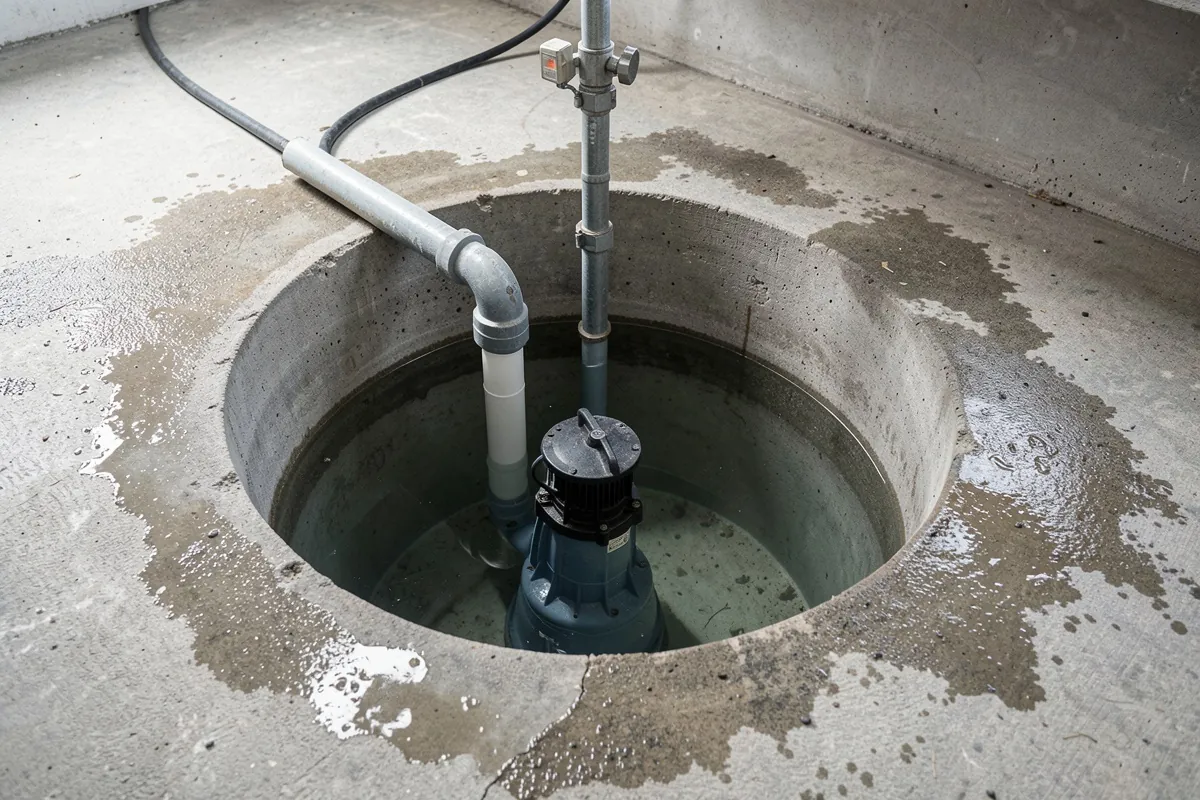
Stop adding water first. If the leak is active, fix the immediate source or redirect the flow. Then remove standing water, move wet contents, and start drying. A wet/dry vac handles small amounts, but carpet pad, baseboards and wall cavities need air movement, dehumidification and moisture readings.
Do not paint or seal a damp wall to hide the stain. Do not replace drywall until the source is corrected and the cavity is dry. If the area has been wet for more than 24 to 48 hours, mold may already be growing. See how fast mold grows after water damage.
For a basement that takes on water after every storm, read basement water damage and sump pump failure after heavy rain. If the water is coming through a window or roof edge, see storm damage.
Maintenance calendar
| Season | Task | Why it matters |
|---|---|---|
| Early spring | Clear winter debris; check for ice damage | Spring rain and snowmelt test the system |
| Late spring | Check downspout extensions and grading | Heavy rain season |
| Late summer | Clear seeds and fluff; inspect hangers | Prevents fall overflow |
| Late fall | Full cleaning after leaves drop | Removes the debris that causes ice dams |
| Before deep freeze | Confirm discharge paths are clear | Prevents frozen blocks and backups |
Insurance and documentation
Maintenance-related water damage is often excluded or limited because the cause is considered preventable. That makes documentation and prevention important. If a storm directly damages the gutter or roof and water enters, photograph the damage before cleanup. If the loss is groundwater or long-term seepage, coverage may be treated differently. Read policy terms that matter after water damage and confirm with your insurer.
When to call a crew
Call if water has entered the basement or a wall cavity, if the wet area is larger than a small puddle, if there is a musty odor, or if the damage has been wet for more than a day. A local crew can extract water, dry the structure and document the loss. Call (888) 217-0216 for 24/7 dispatch in Sioux Falls, Rapid City and surrounding South Dakota communities.
Quick questions
How often should gutters be cleaned in South Dakota?
At least twice a year — late spring and late fall — and more often if mature trees overhang the roof. Check after any major windstorm that strips branches or seeds.
Do gutter guards eliminate cleaning?
No. They reduce large debris but still allow grit, seeds and small material to accumulate. Inspect and flush them annually.
Can a clogged gutter cause a basement leak?
Yes. Overflow saturates the soil beside the foundation and can push water through cracks, the floor-wall joint or window wells. It is one of the most common preventable contributors to basement moisture.
Gutter overflow already found its way inside?
Dry the structure and document the damage before mold takes hold. Local dispatch is open 24/7.
Call (888) 217-0216Written by the South Dakota Water Damage Pros editorial team using local restoration and insurance-claim experience. This is general information, not legal, engineering or insurance advice. Confirm coverage and code requirements with your own professionals.
Keep reading
Related guides
Sump Pump Failure After Heavy Rain
Why pumps quit during the storm that matters and how to dry a basement.
Well Water, Septic and Rural Flooding
Drying a farmstead basement without a city sewer.

Does Insurance Cover Water Damage?
Sudden versus gradual losses and how to document a claim.

Water damage right now?
One call connects you with an available local South Dakota crew.